

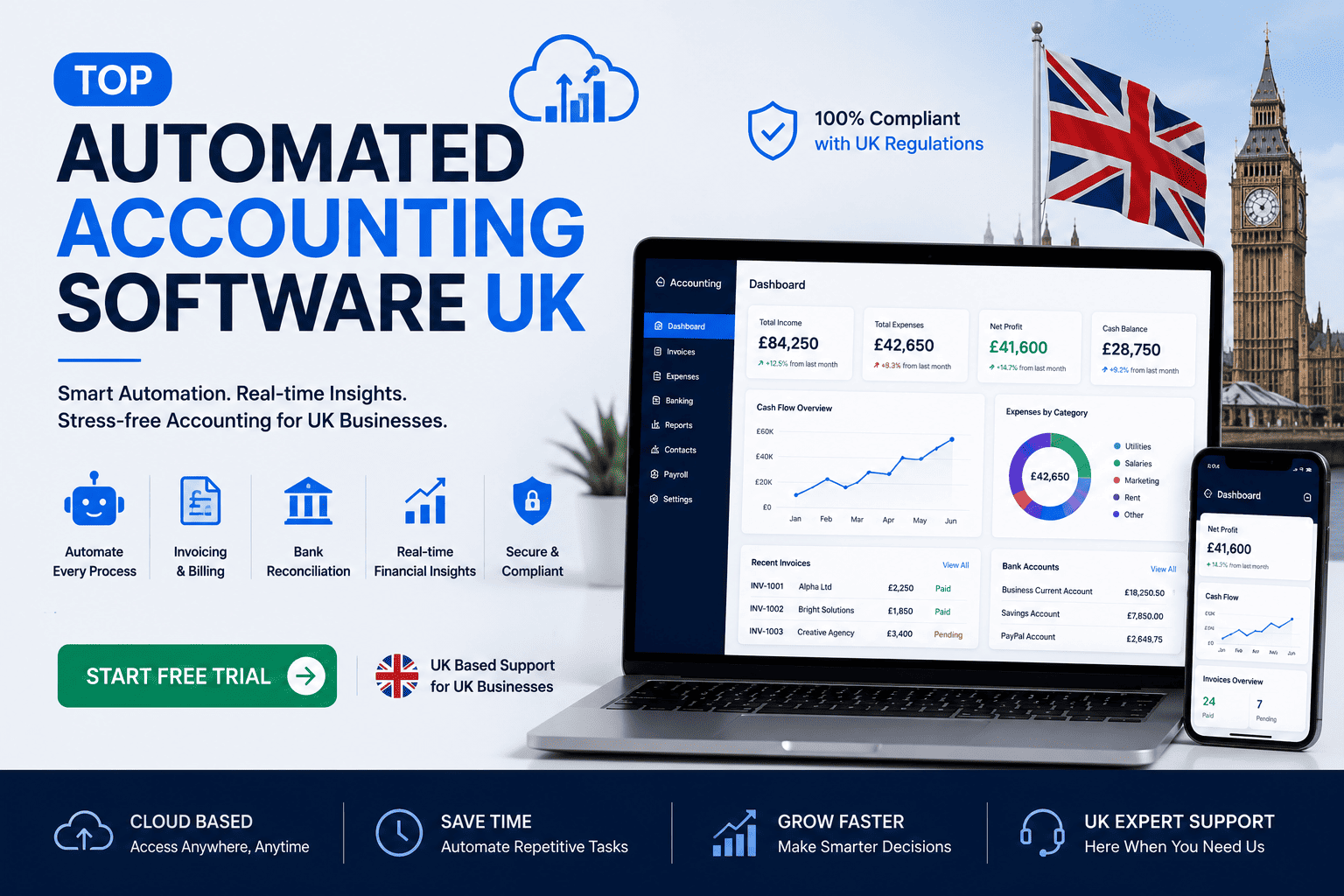
Managing business finances has become increasingly complex as companies handle growing transaction volumes, tax obligations, payroll, expense tracking, and financial reporting. For many UK businesses, relying on manual bookkeeping or outdated spreadsheets is no longer practical. Modern accounting software has transformed financial management by automating repetitive tasks, reducing human error, and providing real-time visibility into business performance.
Whether you’re a freelancer managing invoices, a startup monitoring cash flow, or an established company looking to improve operational efficiency, selecting the right accounting software can save valuable time while helping you make more informed financial decisions.
However, with dozens of accounting platforms available in the UK market, choosing the right solution isn’t always straightforward. Each platform offers different strengths, pricing models, automation capabilities, and integrations. Understanding these differences is essential before making an investment.
This guide explores the top automated accounting software UK businesses can consider, explains the key features that matter most, and provides practical advice to help you select a solution that aligns with your business needs.
What Is Automated Accounting Software? (Featured Snippet)
Automated accounting software is a digital solution that streamlines financial processes by automatically handling tasks such as bookkeeping, invoicing, bank reconciliation, expense tracking, VAT calculations, payroll support, and financial reporting. By reducing manual data entry, these platforms help businesses improve accuracy, save time, and maintain organized financial records.
Why Businesses in the UK Are Adopting Automated Accounting Software
Financial management has evolved significantly over the past decade. Businesses are expected to maintain accurate records, manage digital transactions, and comply with changing tax requirements while continuing to focus on growth.
Manual accounting processes often create challenges such as:
- Time-consuming data entry
- Higher risk of human error
- Delayed financial reporting
- Difficulty tracking expenses
- Inefficient invoice management
- Limited visibility into cash flow
Automated accounting software addresses many of these issues by handling repetitive tasks behind the scenes, allowing business owners and finance teams to focus on higher-value activities such as budgeting, forecasting, and strategic planning.
For businesses operating in competitive markets, greater efficiency can translate into faster decision-making and improved financial control.
Benefits of Using Automated Accounting Software
The value of automation extends beyond saving time. The right software can improve accuracy, strengthen financial oversight, and support better business decisions.
Saves Valuable Time
Automation significantly reduces the amount of manual work involved in everyday accounting.
Tasks commonly automated include:
- Invoice creation
- Recurring billing
- Expense categorization
- Bank reconciliation
- Payment reminders
- Financial reporting
Instead of spending hours updating spreadsheets, businesses can focus on serving customers and growing revenue.
Reduces Human Error
Manual bookkeeping increases the likelihood of mistakes, particularly when dealing with large numbers of transactions.
Automated systems help minimize errors by:
- Importing bank transactions automatically
- Calculating taxes consistently
- Matching payments with invoices
- Categorizing expenses using predefined rules
While no software completely eliminates the need for human review, automation can significantly improve accuracy.
Provides Real-Time Financial Insights
Modern accounting platforms allow businesses to access financial information whenever needed.
Typical dashboards display:
- Cash flow
- Outstanding invoices
- Profit and loss
- Business expenses
- Revenue trends
- Bank balances
Having access to up-to-date financial data supports more informed business decisions.
Improves Collaboration
Cloud-based accounting software enables multiple authorized users to access financial information securely from different locations.
This can improve collaboration between:
- Business owners
- Internal finance teams
- External accountants
- Bookkeepers
- Financial advisors
Rather than exchanging spreadsheets by email, everyone can work from the same centralized data.
Supports Business Growth
As businesses expand, financial management becomes more demanding.
Automated accounting software often scales with growth by supporting:
- Multiple users
- Additional bank accounts
- Inventory tracking
- Multi-currency transactions
- Advanced reporting
- Integration with other business applications
Choosing scalable software can reduce the need for frequent platform changes as your business evolves.
Essential Features to Look for in Automated Accounting Software
Not every accounting platform offers the same capabilities. Before selecting software, evaluate which features are most relevant to your business.
Automated Bank Reconciliation
One of the most valuable automation features is bank reconciliation.
Instead of manually comparing bank statements with accounting records, the software imports transactions and matches them against invoices, payments, and expenses.
Benefits include:
- Faster reconciliation
- Reduced manual work
- Improved accuracy
- Better cash flow visibility
Smart Invoicing
Creating invoices manually can consume valuable time.
Many accounting platforms allow businesses to:
- Create professional invoices
- Schedule recurring invoices
- Send automatic payment reminders
- Accept online payments
- Track invoice status
These features can improve payment collection while reducing administrative effort.
Expense Management
Expense tracking becomes much easier when receipts and purchases are automatically categorized.
Useful capabilities include:
- Receipt uploads
- Automatic expense categorization
- Mileage tracking
- Credit card imports
- Digital document storage
Well-organized expense records simplify financial reporting and year-end accounting.
Financial Reporting
Reliable reporting helps business owners understand financial performance.
Common reports include:
- Profit and loss statements
- Balance sheets
- Cash flow reports
- VAT summaries
- Expense reports
- Accounts receivable reports
These reports support planning and informed decision-making.
Cloud Accessibility
Cloud-based software enables users to access financial information from virtually anywhere with an internet connection.
Advantages include:
- Secure backups
- Automatic updates
- Remote access
- Multi-device compatibility
- Easier collaboration
Cloud platforms have become the preferred choice for many businesses because they eliminate the need to manage local installations.
Who Can Benefit from Automated Accounting Software?
Although accounting software is often associated with finance departments, automation can benefit organizations of many sizes and industries.
Common users include:
- Freelancers
- Sole traders
- Small businesses
- Startups
- Marketing agencies
- E-commerce businesses
- Professional service firms
- Consultants
- Retail businesses
- Growing SMEs
Each organization has unique accounting requirements, making it important to evaluate software based on current needs and future growth plans.
Real-World Example
Consider a small digital marketing agency with a growing client base. As the business expands, manually creating invoices, tracking payments, and reconciling bank transactions begins to consume a significant amount of administrative time.
By adopting automated accounting software, the agency can generate recurring invoices for monthly retainers, automatically import bank transactions, categorize expenses, and produce financial reports with minimal manual input. This allows the team to spend less time on administrative tasks and more time delivering services to clients.
While the specific benefits will vary depending on the software selected and the business’s workflow, this example illustrates how automation can improve day-to-day financial management.
Key Factors to Consider Before Choosing Accounting Software
Selecting accounting software involves more than comparing feature lists. Consider how well each platform aligns with your operational requirements.
Evaluate factors such as:
| Factor | Why It Matters |
| Business Size | Ensures the software matches current and future needs |
| Ease of Use | Reduces the learning curve for your team |
| Automation Features | Improves efficiency by reducing manual work |
| Reporting Capabilities | Supports informed financial decisions |
| Scalability | Accommodates business growth |
| Security | Helps protect sensitive financial information |
| Customer Support | Assists with setup and ongoing use |
| Integration Options | Connects with payroll, CRM, e-commerce, and payment systems |
| Pricing | Ensures long-term affordability and value |
Choosing software based on your business requirements—rather than simply selecting the most popular option—can lead to better long-term results.
Top Automated Accounting Software UK Businesses Can Consider
Choosing the right accounting platform depends on your business size, industry, budget, and operational requirements. Rather than looking for a single “best” solution, it’s more useful to evaluate which software aligns with your workflow and long-term goals.
Below are some of the most widely used automated accounting solutions available to UK businesses.
1. Xero
Best For
Small businesses, growing SMEs, and service-based companies.
Xero is a cloud-based accounting platform known for its user-friendly interface and strong automation capabilities. It offers a wide range of features that help businesses reduce manual bookkeeping while maintaining accurate financial records.
Key Features
- Automatic bank reconciliation
- Online invoicing
- Expense management
- Cash flow tracking
- Financial reporting
- Inventory support
- Payroll integrations
- Mobile app
Advantages
- Intuitive dashboard
- Strong ecosystem of third-party integrations
- Suitable for growing businesses
- Supports collaboration with accountants
Considerations
Businesses with complex enterprise accounting requirements may require more advanced financial management tools.
2. QuickBooks Online
Best For
Freelancers, sole traders, startups, and small businesses.
QuickBooks Online offers a comprehensive suite of accounting features combined with automation tools that simplify bookkeeping and reporting.
Key Features
- Automated transaction categorization
- Invoice automation
- Expense tracking
- VAT management
- Financial dashboards
- Budgeting tools
- Bank feeds
Advantages
- Easy to learn
- Comprehensive reporting
- Strong mobile functionality
- Suitable for businesses with limited accounting experience
Considerations
Some advanced features may only be available on higher subscription plans.
3. FreeAgent
Best For
Freelancers, contractors, and small UK businesses.
FreeAgent is designed to simplify accounting for independent professionals and smaller organizations by combining automation with an easy-to-understand interface.
Key Features
- Invoice automation
- Expense tracking
- Time tracking
- Project management
- Tax estimation
- Bank reconciliation
- Cash flow insights
Advantages
- Simple user experience
- Built with UK businesses in mind
- Helpful for service-based professionals
Considerations
Larger organizations with more complex accounting needs may require additional functionality.
4. Sage Accounting
Best For
Small businesses looking for scalable accounting solutions.
Sage has served businesses for decades and continues to provide accounting software that supports automation, reporting, and financial management.
Key Features
- Bank reconciliation
- Invoice automation
- Cash flow management
- VAT support
- Financial reporting
- Supplier management
Advantages
- Established reputation
- Suitable for businesses planning long-term growth
- Strong reporting capabilities
Considerations
Some users may find the interface requires a little more time to learn compared to newer platforms.
5. FreshBooks
Best For
Consultants, agencies, freelancers, and creative professionals.
FreshBooks focuses on simplifying invoicing, client billing, and expense management while offering useful automation features.
Key Features
- Automated invoices
- Online payments
- Time tracking
- Expense management
- Financial reporting
- Client portal
Advantages
- Excellent invoicing workflow
- Easy client management
- User-friendly interface
Considerations
Businesses with complex inventory management needs may prefer more comprehensive accounting platforms.
6. Zoho Books
Best For
Growing businesses already using the Zoho ecosystem.
Zoho Books combines accounting automation with business management tools that help streamline operations.
Key Features
- Automated workflows
- Invoice management
- Bank reconciliation
- Expense tracking
- Inventory management
- Financial reporting
Advantages
- Strong automation capabilities
- Extensive integrations within the Zoho platform
- Customizable workflows
Considerations
Businesses not using other Zoho applications may not benefit fully from its integrated ecosystem.
Comparison Table: Top Automated Accounting Software UK
| Software | Best For | Cloud-Based | Invoice Automation | Bank Reconciliation | Financial Reporting |
| Xero | SMEs | ✔ | ✔ | ✔ | ✔ |
| QuickBooks Online | Small businesses | ✔ | ✔ | ✔ | ✔ |
| FreeAgent | Freelancers | ✔ | ✔ | ✔ | ✔ |
| Sage Accounting | Growing businesses | ✔ | ✔ | ✔ | ✔ |
| FreshBooks | Agencies & consultants | ✔ | ✔ | ✔ | ✔ |
| Zoho Books | Growing businesses | ✔ | ✔ | ✔ | ✔ |
Note: Features and subscription plans may change over time. Always review the latest information from the software provider before making a purchasing decision.
How to Choose the Right Accounting Software
With several capable platforms available, the best choice depends on your specific business requirements.
Ask yourself the following questions:
What Is My Business Size?
Your current stage influences which features you’ll need.
For example:
- Freelancer
- Sole trader
- Startup
- Small business
- Medium-sized company
Choosing software that matches your current size while allowing room for growth can help avoid unnecessary platform changes later.
What Tasks Do I Want to Automate?
Different businesses prioritize different workflows.
Consider automating:
- Invoice creation
- Payment reminders
- Expense tracking
- Payroll support
- Bank reconciliation
- VAT calculations
- Financial reporting
Focus on software that addresses the tasks consuming the most time.
Will My Business Grow?
Think beyond today’s requirements.
Scalable software should support:
- More users
- Additional bank accounts
- Higher transaction volumes
- Integration with other business systems
- Expanded reporting needs
Selecting software that grows with your business can reduce disruption in the future.
Does It Integrate with Existing Tools?
Many businesses rely on multiple applications to manage daily operations.
Useful integrations may include:
- CRM platforms
- E-commerce systems
- Payroll software
- Payment gateways
- Inventory management
- Project management tools
Integrated systems help reduce duplicate data entry and improve operational efficiency.
Practical Tips for Getting the Most from Accounting Automation
Investing in software is only the first step. Businesses often see the greatest value when they adopt efficient processes alongside automation.
Consider these practical tips:
Keep Financial Records Organized
Maintain consistent records for:
- Customer invoices
- Supplier bills
- Business expenses
- Receipts
- Bank statements
Good record-keeping improves reporting accuracy and simplifies financial reviews.
Review Financial Reports Regularly
Automation generates valuable financial insights, but they are only useful if reviewed consistently.
Monitor reports such as:
- Profit and loss
- Cash flow
- Outstanding invoices
- Business expenses
- Revenue trends
Regular reviews can help identify patterns and support informed decision-making.
Train Your Team
Even intuitive software requires users to understand its features.
Provide basic training on:
- Invoice management
- Expense recording
- Report generation
- User permissions
- Workflow automation
A well-trained team is more likely to use the software effectively and consistently.
Back Up Important Documentation
Although cloud platforms typically store data securely, businesses should also maintain organized records of essential financial documents, particularly where required for legal, tax, or audit purposes.
Real-World Example
Imagine an e-commerce retailer processing hundreds of customer orders every week.
Without automation, the finance team manually records payments, updates inventory, creates invoices, and reconciles bank transactions. As order volumes increase, these tasks become increasingly time-consuming.
After implementing automated accounting software, many of these repetitive processes can be streamlined. Bank transactions import automatically, invoices are generated digitally, recurring reports become easier to produce, and financial information is available in real time. This allows the team to spend more time analyzing business performance instead of completing repetitive administrative tasks.
The exact improvements will depend on the software selected, how it is configured, and the organization’s existing processes, but the example illustrates how automation can improve efficiency.
Common Mistakes to Avoid When Choosing Accounting Software
Businesses sometimes focus on popularity instead of suitability.
Avoid these common mistakes:
- Choosing software without identifying business requirements.
- Ignoring future scalability.
- Overlooking integration capabilities.
- Selecting features you’ll never use.
- Focusing only on price rather than long-term value.
- Failing to involve accountants or finance professionals during evaluation.
- Not testing the software before committing to a subscription.
Taking time to evaluate your options carefully can lead to a better long-term investment.
Best Practices for Implementing Automated Accounting Software
Selecting the right accounting platform is only part of the journey. To maximize its value, businesses should implement the software with a clear plan, well-defined processes, and regular reviews. A thoughtful implementation can improve adoption, reduce errors, and help teams take full advantage of automation.
1. Define Your Business Requirements First
Before migrating financial data, identify the processes you want to improve.
Ask questions such as:
- Which accounting tasks consume the most time?
- What reports does the business rely on regularly?
- How many users need access?
- Which existing business applications require integration?
- What level of automation would provide the greatest benefit?
Answering these questions helps ensure the software is configured to support your operational goals.
2. Clean Your Financial Data
Migrating inaccurate or duplicate records into a new system can create long-term issues.
Before implementation:
- Review customer records.
- Update supplier information.
- Remove duplicate entries.
- Verify opening balances.
- Organize expense categories.
Starting with clean financial data improves reporting accuracy and simplifies ongoing bookkeeping.
3. Configure Automation Carefully
Automation should streamline work without reducing oversight.
Consider setting up:
- Recurring invoices
- Automatic payment reminders
- Bank transaction rules
- Expense categorization
- Regular financial reports
- Approval workflows where appropriate
Review automated processes periodically to confirm they continue to reflect your business needs.
4. Monitor Financial Performance Regularly
Automation makes financial information more accessible, but business owners should still review key metrics consistently.
Useful reports include:
- Profit and loss
- Cash flow statement
- Balance sheet
- Outstanding receivables
- Business expenses
- Revenue trends
Regular reviews help identify opportunities for improvement and support informed decision-making.
Future Trends in Accounting Automation
Accounting technology continues to evolve, offering businesses new ways to improve efficiency while maintaining accurate financial records.
Some emerging trends include:
Artificial Intelligence
AI-powered features are increasingly being used to assist with:
- Transaction categorization
- Expense recognition
- Invoice processing
- Financial forecasting
- Anomaly detection
These capabilities can reduce repetitive work while helping finance teams focus on higher-value analysis.
Real-Time Financial Reporting
Modern cloud platforms increasingly provide live dashboards that update as transactions occur.
This enables businesses to:
- Monitor cash flow
- Review revenue trends
- Track outstanding invoices
- Identify financial issues more quickly
Access to real-time data supports faster and more informed business decisions.
Improved Integrations
Accounting software is becoming more connected with other business applications, including:
- Customer relationship management (CRM) systems
- E-commerce platforms
- Payroll solutions
- Payment gateways
- Inventory management software
Integrated workflows reduce duplicate data entry and create a more connected business environment.
Enhanced Security
As financial data becomes increasingly digital, software providers continue investing in features such as:
- Multi-factor authentication
- Data encryption
- Role-based user permissions
- Secure cloud backups
- Activity logs
Businesses should also follow good cybersecurity practices to help protect sensitive financial information.
Checklist for Choosing the Right Automated Accounting Software
Before making a decision, use the following checklist.
✔ Matches your business size
✔ Supports your accounting workflow
✔ Offers useful automation features
✔ Provides clear financial reporting
✔ Integrates with existing business systems
✔ Can scale with future growth
✔ Includes reliable customer support
✔ Meets your budget requirements
✔ Offers appropriate security features
✔ Has an interface your team can use confidently
This checklist can help narrow your options and support a more informed decision.
Frequently Asked Questions (FAQs)
1. What is automated accounting software?
Automated accounting software is a digital solution that helps businesses manage financial tasks such as invoicing, bookkeeping, expense tracking, bank reconciliation, and reporting with reduced manual effort. Automation improves efficiency while helping maintain organized financial records.
2. Why should UK businesses use automated accounting software?
Many UK businesses adopt automated accounting software to simplify routine financial tasks, improve reporting, reduce manual data entry, and gain better visibility into business performance. The right platform can also support collaboration between business owners, accountants, and finance teams.
3. Which features should I look for when choosing accounting software?
Important features often include:
- Automated bank reconciliation
- Invoice management
- Expense tracking
- Financial reporting
- Cloud access
- Secure data storage
- Integration with payroll and other business applications
- User-friendly interface
The ideal feature set depends on your business requirements.
4. Is cloud-based accounting software secure?
Reputable cloud accounting providers typically use security measures such as encryption, secure authentication, and regular backups. Businesses should also follow recommended security practices, including using strong passwords and enabling multi-factor authentication where available.
5. Can small businesses benefit from accounting automation?
Yes. Small businesses often benefit by reducing administrative work, improving financial organization, and accessing real-time reports that support better business decisions. The level of benefit depends on how the software is implemented and used.
6. How often should financial records be reviewed?
Although automation reduces manual work, businesses should review financial reports regularly. The appropriate review schedule depends on the organization’s size and operational needs, but consistent monitoring helps identify trends and maintain accurate records.
7. Can automated accounting software replace an accountant?
Accounting software can automate many routine tasks, but it does not replace professional financial advice. Many businesses continue working with qualified accountants for tax planning, compliance, financial strategy, and complex accounting matters.
Conclusion
Managing business finances efficiently is essential for long-term success, and automation has become an important part of modern accounting. By reducing repetitive administrative work, improving record accuracy, and providing real-time financial insights, automated accounting software enables businesses to spend more time focusing on growth rather than manual bookkeeping.
As we’ve explored throughout this guide, the top automated accounting software UK businesses choose will depend on factors such as company size, workflow requirements, scalability, integration capabilities, and budget. Rather than selecting software based solely on popularity, evaluate how well each platform supports your day-to-day operations and future business objectives.
Whether you’re a freelancer, startup, SME, or established organization, investing time in choosing the right accounting solution can improve efficiency, strengthen financial visibility, and simplify ongoing financial management. When combined with well-organized processes and regular financial reviews, accounting automation can become a valuable long-term asset for your business.
Key Takeaways
- Automated accounting software helps reduce manual bookkeeping and repetitive financial tasks.
- Define your business requirements before comparing software options.
- Prioritize features that align with your current workflows and future growth plans.
- Cloud-based platforms improve accessibility and collaboration across teams.
- Review financial reports regularly to support informed business decisions.
- Integrations with payroll, CRM, and payment systems can improve operational efficiency.
- Maintain accurate financial data to maximize the benefits of automation.
- The best accounting software is the one that fits your business needs—not simply the most popular option.